
Skip to content
Untitled design (21)

What We're Learning About Health Equity

by Jasmine Hall Ratliff


When people think about health equity, they often focus on access to hospitals, clinics, or medical care. At Build Missouri Health, we believe that equitable health outcomes are shaped by much more than what happens inside a hospital or clinic.

And the more we learn alongside our partners and communities, the more we see just how many factors influence health.

Where can a healthcare worker afford to live? How does extreme heat affect neighborhoods with fewer trees and less access to cooling? Questions like these may not immediately sound like health equity issues, but they have a profound impact on who has the opportunity to live a healthy life.

We recently had the opportunity to work with two graduate students who helped us explore those connections through research. Nathan James, a graduate student at AT Still University in Kirksville, MO examined the connection between affordable housing and Missouri's healthcare workforce. Elisabeth Doty, a graduate student at the Frank Batten School of Leadership and Public Policy at the University of Virginia, explored extreme heat as a health equity issue in her hometown, St. Louis. Together, their work asks a similar question:

What conditions help people and communities thrive?
Screenshot 2026 07 31 at 2.41.49 pm

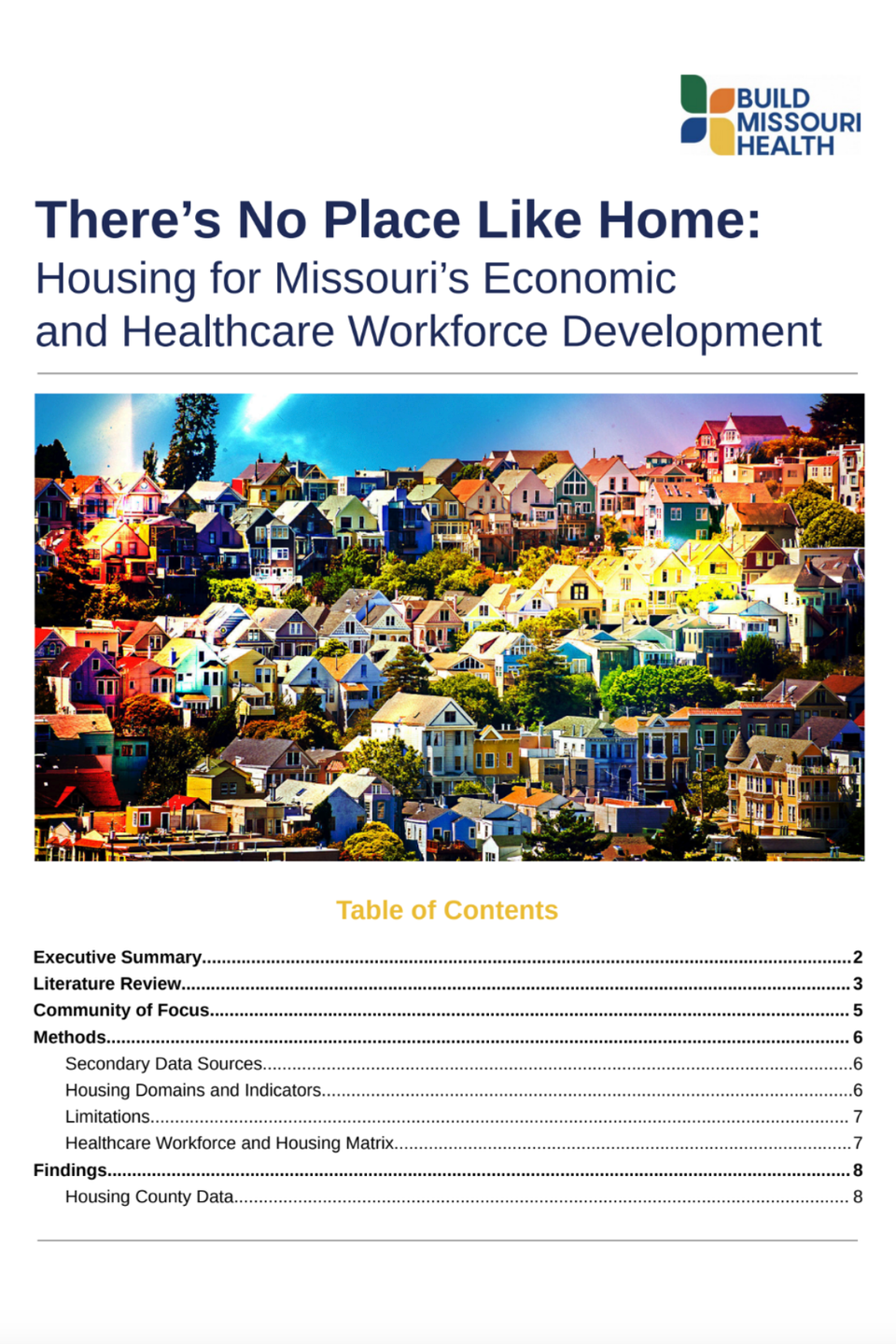
Nathan's report, "There's No Place Like Home: Housing for Missouri's Economic and Healthcare Workforce Development", examines the growing challenge of affordable housing for healthcare workers across Missouri. We often talk about healthcare workforce shortages, but this research reminds us that recruitment and retention aren't only about salaries or training pipelines. They're also about whether nurses, medical assistants, community health workers, and other essential healthcare professionals can afford to live in the communities they serve.

 The findings are striking. Across much of Missouri, many lower-wage healthcare workers earn less than what's needed to afford a modest two-bedroom rental, creating barriers to recruitment, retention, and long-term workforce stability. The report also highlights innovative approaches from around the country where healthcare systems are investing in workforce housing as part of their long-term strategy.


"As I worked on this research, I expected affordability to be the primary challenge, but I was struck by how closely housing shortages also aligned with regions experiencing workforce recruitment and retention difficulties. Whether in urban areas facing high housing costs or rural communities with limited housing supply, the underlying issue was remarkably similar: without affordable and attainable workforce housing, it becomes much harder to attract and retain the healthcare professionals communities depend on."
Nathan James, MBA-HCA, MPH
Screenshot 2026 07 31 at 2.42.20 pm


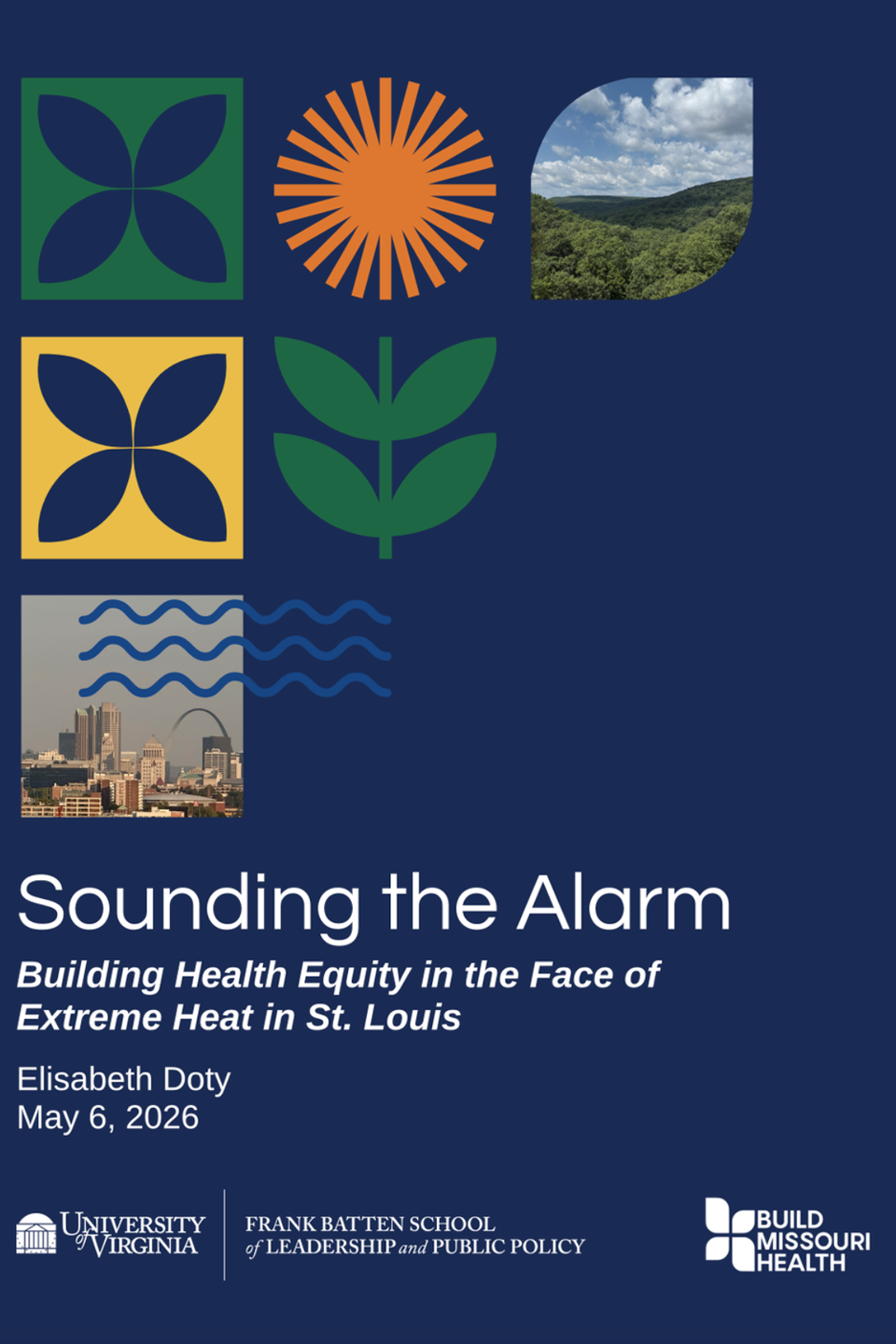
Elisabeth's report, "Sounding the Alarm: Building Health Equity in the Face of Extreme Heat in St. Louis", developed in partnership with the Missouri Coalition for the Environment, explores how rising temperatures disproportionately affect neighborhoods that have experienced historic disinvestment and other health inequities.

Rather than viewing extreme heat as simply a weather issue, the report defines it as a public health issue—and one that requires community-centered solutions.

"Official counts of heat deaths in the St. Louis area remain in the single digits annually. But those numbers undercount by orders of magnitude all the people who die or are harmed because of other health conditions made worse by heat. Many of the residents and community advocates I spoke to highlighted the harrowing lived experiences of St. Louisans in the face of rising heat, but the gap between official counts and lived realities has meant that we underestimate the threat– with deadly consequences."
Elisabeth Doty, MPP
While these topics may seem very different, they reinforce something we believe at Build Missouri Health: Health is shaped by more than healthcare.

The places where people live, work, and age—and the systems that support those communities—have a profound impact on health outcomes. That's why we're committed to supporting work that crosses sectors, builds new partnerships, and helps uncover solutions that might otherwise go unseen.

I'm incredibly grateful to Nathan and Elisabeth for bringing curiosity, thoughtful analysis, and fresh perspectives to these projects. Their work gives all of us a stronger foundation for future conversations and, we hope, future action.

Over the coming weeks, we'll be sharing more about what they discovered and why these findings matter, not only for Build Missouri Health, but for partners, policymakers, and communities working to create more equitable health outcomes across Missouri. I hope you'll follow along.

Thank you for being part of this growing community of partners, donors, project leaders, and supporters. Together, we're helping create the conditions that allow communities—and the people leading change within them—to flourish.